AI in Procurement: Breaking Down Silos
AI standardizes supplier data, automates approvals, and creates shared specs to cut procurement costs, cycle time, and manual handoffs.
In this article
Procurement slows down when teams work from different systems, different data, and different approval paths. The fix is simple in theory: use AI to standardize supplier data, route requests by rules, and give procurement, finance, legal, AP, and technical teams one shared view of the same purchase.
Here’s the short version:
Silos cost money: manual invoices average $12.88 each, and manual PO processing adds $50–$150 per order.
Silos slow work: manual sourcing often takes 10–12 weeks, and req-to-pay can sit around 17 days.
Data is a big blocker:75% of organizations lack a shared data model across ERP, AP, sourcing, and finance systems.
Spend visibility is weak: less than 70% of spend data sits in one place, which makes maverick spend and supplier overlap harder to spot.
AI helps in three main ways: it cleans data, routes approvals, and turns messy inputs into structured specs.
Human review still matters: high-risk actions like new suppliers or large contracts should still go through people.
Results should show up in KPIs: lower cycle time, fewer invoice exceptions, fewer manual handoffs, and more spend under management.
One part that often gets missed is specification work. If engineering writes requirements one way and procurement needs them another way, the process stalls early. Tools like Procright fit at that step by turning scattered technical procurement specifications into structured specs that other teams can review without extra back-and-forth.
If I had to sum it up in one line, it would be this: AI works best when every team starts from the same data, the same rules, and the same source of truth.
AI in Procurement: Smarter Sourcing, Contracts, & Supplier Management
Why silos persist across procurement, finance, and technical teams
Those costs stem from a structural issue: procurement, finance, and technical teams are working toward different goals, often inside different systems.
Misaligned goals and split ownership
Each team is trying to do its job well, but they’re not aiming at the same target. Procurement is pushed to cut costs and keep contracts on track. Finance cares about budget control and clean audit trails. Engineering and operations want tools that fit the job and don’t slow them down. All of that makes sense. But once those aims meet inside one approval flow, friction shows up fast.
Rob Saker, Global VP of Consumer Industries at Databricks, put it plainly:
"Maverick spend is not a compliance problem. It is a design problem."
That line gets to the heart of it. If a formal reorder takes days, but a quick email to a vendor takes minutes, people will take the faster path. They’re not always trying to dodge policy. Often, they’re just trying to keep work moving. That helps explain why 57% of CPOs say siloed working is the top barrier to value delivery. And the problem gets worse when systems don’t share clean, consistent data.
Data and process gaps that block collaboration
Even when teams want to work together, the data often gets in the way. Seventy-nine percent of organizations don’t normalize vendor data across systems, which means the same supplier may show up under different names in different tools. Add inconsistent item descriptions, mismatched cost center codes, and contract terms buried in PDFs, and you get a lot of manual cleanup.
In multi-ERP setups, 80% of leaders report process conflicts that force manual intervention. McKinsey estimates that procurement teams use less than 20% of available data to support decision-making. Everything else is scattered across emails, spreadsheets, and disconnected tools that no single team owns.
That’s where AI starts to matter. It can standardize inputs and compare products across teams without all the back-and-forth.
How AI creates a unified procurement workflow
AI helps by linking systems and making work more consistent without forcing teams to rip out what they already use. The biggest wins usually come from shared data, automated routing, and standard specs.
AI-driven data standardization and shared visibility
AI can match supplier records across different systems, merge duplicates, and normalize category labels into one shared taxonomy. So if finance uses "Professional Services" and procurement uses "Consulting", AI can map both to the same category.
"High-quality, well-governed data is the single biggest differentiator in ROI on AI initiatives." - Gartner
Once that data lines up, approvals can move forward with far less manual back-and-forth.
Automated routing, approvals, and compliance checks
AI can classify requests based on spend category, dollar amount, and risk level, then send each one to the right reviewer automatically. That cuts out a lot of manual chasing.
For routine transactions that already fit policy, AI-enabled procure-to-pay systems can achieve fully automated processing rates of 70–85% for indirect invoices. When the stakes are higher, the process stays human-led where it needs to. New supplier activations or contracts above set thresholds still go through human sign-off by design. AI handles the logic, rules keep decisions consistent, and people keep approval authority for higher-stakes actions.
Where Procright fits in the workflow
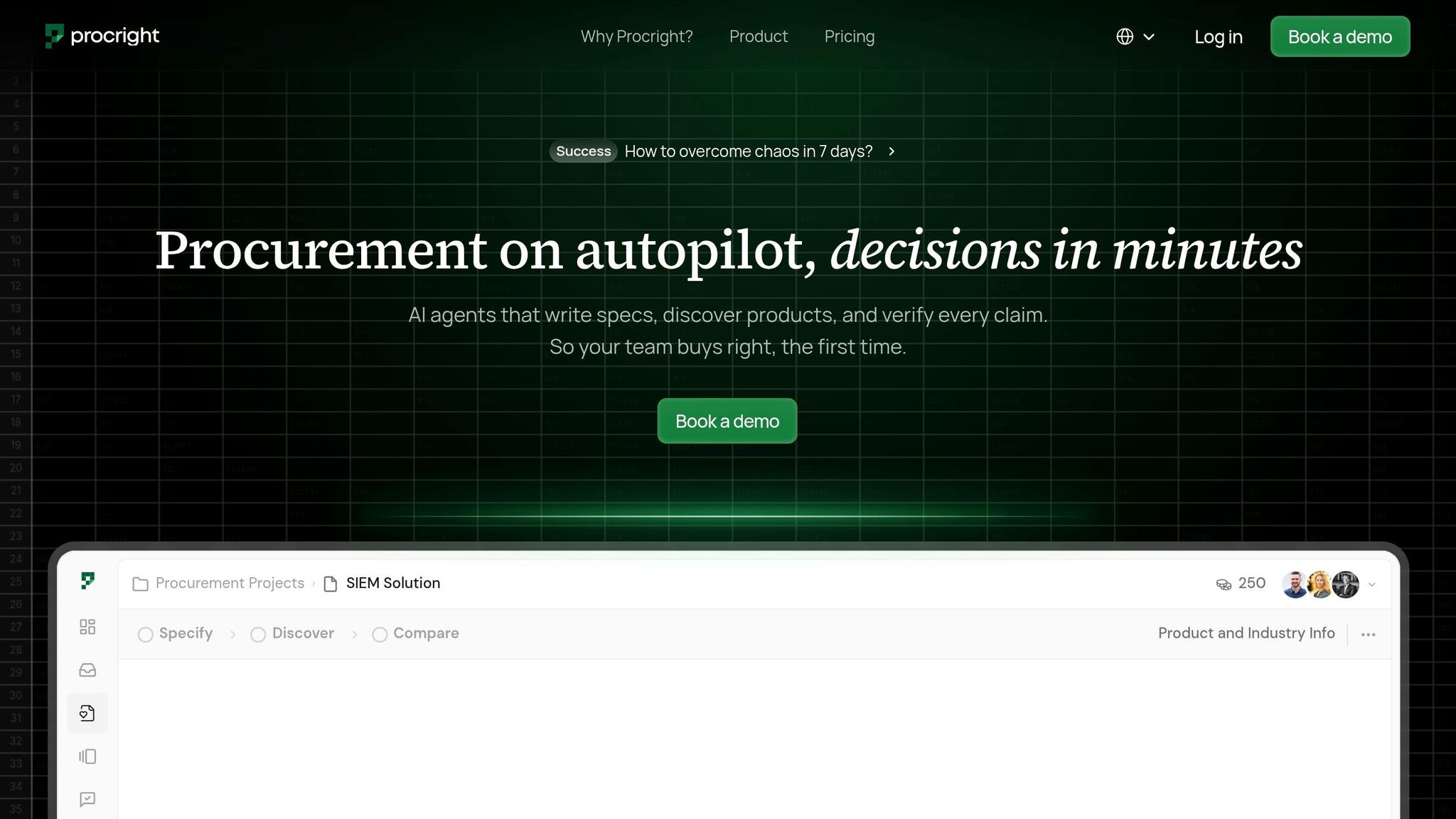
Specification creation is often where technical requirements turn into workflow friction. Technical teams may write specs that make sense to engineers but don't translate cleanly for procurement or finance.
Procright steps in at that point. Its AI engine turns fragmented technical requirements into detailed technical specifications that are ready for review. It also flags missing details and suggests industry-standard requirements automatically.
Each product match ties back to its source document, whether that's a PDF, a web page, or a video. That means finance and compliance teams can check claims themselves instead of sending another round of follow-up questions. This allows teams to compare products for compliance without manual data entry. The result is one shared starting point for procurement, finance, and technical teams.
The AI capabilities that reduce fragmentation most effectively
The clearest gains show up in three areas: specs, shared analytics, and approvals.
Specification standardization and shared product evaluation
AI can turn scattered requirements into standardized specs that procurement, finance, and technical teams can all use. That matters because everyone starts from the same document instead of arguing from different spreadsheets, notes, or email threads.
AI can also compare products against the spec and rank them by compliance score. So each team reviews options on the same basis, not by gut feel or department bias. Procright supports this by turning technical requirements into structured specs ready for cross-team review.
Once teams are working from the same spec, the next slowdown usually comes from the data used to approve, rank, and buy.
Shared analytics for spend, supplier risk, and compliance
Shared dashboards give procurement, finance, and operations one live view of spend, risk, and compliance. If a supplier risk shows up, every team is already looking at the same picture. That cuts down on the back-and-forth that often slows decisions.
In mature procurement settings, companies using advanced predictive analytics have increased their pipeline of value-creation initiatives by up to 200%.
Shared visibility matters most when it helps teams move approvals faster.
Workflow orchestration with fewer manual handoffs
Sequential approvals are one of the clearest signs of silo-based procurement. In one procurement study, 27% of respondents reported needing 10 or more approvals for a single purchase.
AI orchestration replaces that linear chain with parallel review. Legal, Security, IT, and Finance can all work through a request at the same time, which removes the handoff points where ownership often gets lost between teams.
A simple way to set this up:
AI handles unstructured documents
Fixed rules enforce thresholds
Low-confidence cases go to human review
How to measure results and maintain cross-functional alignment
KPIs that show whether silos are actually shrinking
Once the workflow is unified, the next step is simple: check whether the shift is showing up in the numbers.
Track four metrics to see whether silos are shrinking.
Cycle time is one of the clearest signals. Req-to-pay cycle time should fall from about 17 days to under 5.
Spend under management (SUM) tells a similar story. Many organizations still send only 60%–70% of spend through formal procurement channels. As teams work from the same process, more spend should move through those channels.
Two other metrics deserve close attention: invoice exception rates and manual handoffs per transaction. High exception rates usually mean procurement and AP still aren't in sync. Fewer manual touches show the workflow is shifting away from back-and-forth handoffs and toward automated flow.
The goal is clear: faster cycle time, lower processing cost, and higher spend under management.
Governance steps that keep workflows unified
Metrics don't hold up on their own. Someone has to own each part of the process.
A RACI model makes ownership clear at every procurement stage and closes the handoff gaps that create silos. If no one knows who approves an exception or who owns a compliance flag, teams slip back into old habits.
It also helps to move policy checks from after-the-fact audits to automated controls at the point of commitment. Then back that up with regular reviews across procurement, finance, IT, and legal to fix data issues and bottlenecks. Without that kind of follow-through, even well-built AI systems can drift back into fragmentation.
Conclusion: AI works best when all teams share one source of truth
Silos don't appear because people want them to. They show up when goals don't match, data sits in separate systems, and nobody owns the full process from start to finish. AI can deal with all three, but only if it's built on clean data, clear ownership, and shared visibility.
The teams that get lasting results treat AI as shared procurement infrastructure, not a tool for one department. Standardized workflows, role-based dashboards, and transparent compliance scores give procurement, finance, and technical teams the same foundation to work from. Platforms like Procright support this by automating technical specification creation, product discovery, and compliance verification.
One shared source of truth turns AI from a productivity boost into structural change.
FAQs
How does AI reduce procurement silos?
AI cuts down procurement silos by linking separate systems, data, and workflows into one end-to-end process. That gives teams across procurement, legal, finance, and operations access to the same real-time information, so they can work together more easily and rely on a single source of truth.
It also takes routine tasks off people’s plates, improves visibility and compliance, and helps teams make decisions faster. Tools like Procright support this by automating specification creation, product discovery, and compliance verification.
What procurement tasks still need human review?
Tasks that still need human review include checking AI recommendations, handling exceptions, guiding big-picture decisions, and making sure procurement workflows meet compliance rules and clear lines of accountability.
How can teams measure if silos are shrinking?
Teams can tell if silos are starting to shrink by watching a few simple signals: more data shared in real time, faster decisions, and better collaboration across departments.
You’ll usually see it in day-to-day work first. People spend less time chasing updates, fewer handoffs need manual follow-up, and work moves with less back-and-forth.
Two signs stand out:
Reduced manual coordination
Increased workflow automation
When those patterns show up together, teams are often spending less energy working around gaps between departments and more time moving work forward.
Related Blog Posts
Try it on a real buy
Bring one category. Watch where the flags land.
We use a little analytics to see which pages actually help. Nothing else, no ad trackers.