Software Contract Negotiation: The Enterprise Playbook
Teams treat software contract negotiation as pricing plus legal review. A stronger approach makes every term traceable before signature and testable after.
In this article
A software renewal lands in your inbox. The budget is already assigned, the business owner wants continuity, and the vendor's proposal looks familiar enough to approve. Then someone notices that the API allowance changed, the service credits are weaker than last year, and the renewal clause allows pricing to move without a meaningful approval step.
That situation is common because teams still treat software contract negotiation as a pricing conversation followed by a legal review. A stronger approach treats the deal as an evidence-backed, audit-ready operating document. Every requirement, concession, approval, and final term should be traceable before signature and testable after implementation.
Table of Contents
Why Software Deals Fail Before They Start
The first warning sign often appears before anyone opens the redline. The buyer has a fixed budget, IT has a deadline, and the vendor has presented a polished proposal built around its preferred package. Everyone agrees that the product meets the need, so the discussion moves quickly toward price and signature.
Six months later, the organization discovers that “unlimited” API access meant unlimited access within a narrow fair-use policy. The service level agreement describes targets but offers no useful remedy. The renewal notice goes to a mailbox no one monitors. None of these problems necessarily came from bad faith. They came from terms that were never defined precisely enough for operations, finance, and legal to interpret in the same way.

The signature isn't the finish line
A WorldCC sector report found that about 4.5% of technology and software agreements experience one or more significant disagreements during performance. The report focuses on technology and software contracts between businesses and government, but its lesson applies broadly to enterprise buying. Scope, service levels, and other performance conditions are among the terms most likely to create later disagreement. The WorldCC sector report provides a useful baseline for understanding why a signed agreement can still fail operationally.
The common mistake is to negotiate the document as if it were a static legal artifact. Software contracts govern a changing service, recurring charges, user access, integrations, data handling, support, and renewal decisions. If the contract doesn't explain how those elements behave in practice, the buyer has paid for ambiguity.
Practical rule: If an operational team couldn't test a term, the contract probably hasn't defined it well enough.
A defensible negotiation keeps the evidence trail alongside the draft. Save the original specification, vendor responses, product documentation, pricing versions, security answers, approval comments, and final exhibits. When a sales claim matters, connect it to a document or written response rather than relying on a meeting memory. Teams that already use tools for AI-powered earnings analysis will recognize the same principle here, useful conclusions need a traceable evidence base.
The result is a different kind of negotiation. You aren't asking only, “Can you reduce the price?” You're asking, “Which requirement does this concession support, what risk does it remove, and where is the agreed position recorded?” That shift prevents the familiar cycle of rushed approval, operational surprise, and difficult renewal.
Preparing for High-Stakes Software Discussions
Negotiation starts before the first vendor meeting. Begin by building one source of truth for the agreement, renewal date, current price, committed quantities, actual usage, support history, open incidents, security obligations, and relevant benchmark evidence. Pull information from the contract, order forms, invoices, usage reports, ticket records, and product documentation. Don't let the vendor's renewal quote become the most complete record of your own commercial relationship.
A central contract inventory also exposes dependencies. An apparently small renewal may control a critical integration, a data export, a business process, or access for another department. Review this vendor due diligence checklist when the original purchase file is incomplete or the supplier's current claims don't match the evidence on hand.
Align the internal position
Bring IT, procurement, finance, legal, security, and the business owner into one preparation cycle. Each group should agree on the outcome before the vendor asks for a concession.
Write down four positions:
Required terms: The conditions the service must meet, such as defined availability, data use restrictions, exit assistance, or an approved pricing metric.
Target terms: The result that represents a strong deal, including the preferred commercial model and operating protections.
Tradeable terms: Items the team can exchange, such as contract length, payment timing, implementation support, or a phased rollout.
Walk-away point: The combination of price, risk, and performance conditions beyond which the organization will pause, switch, or decline the purchase.
A walk-away point only strengthens the negotiating position if the business owner accepts it in advance. If the team decides that it can't leave the vendor after the negotiation starts, the vendor will eventually learn that the apparent alternative isn't real.
Start before the calendar forces you to
One software negotiation playbook recommends beginning at least 90 days before renewal, while another warns that starting with fewer than 60 days typically eliminates meaningful timing advantage. The practical software negotiation workflow connects early preparation with contract inventory, usage evidence, stakeholder alignment, target terms, and renewal protections.
Use the preparation window to test whether the current quantity still matches demand, whether unused modules can be removed, and whether the vendor's proposed metric reflects actual value. Also examine the cost of delay. A lower rate isn't a good outcome if the contract leaves the company unable to exit, reduce unused seats, or control consumption.
Negotiating Critical Contract Clauses
Price matters, but the clauses around price determine whether the deal remains workable. Review each provision against a real operating event: a usage spike, a service outage, a security incident, a merger, a failed implementation, or a decision to leave the platform. If the language doesn't tell the parties what happens next, the buyer should treat the gap as a negotiation issue.

Licensing rights must match real use
Start with the metric. Is the fee based on named users, active users, transactions, storage, environments, locations, revenue, or a blended formula? Define what counts, how usage is measured, when it is reported, and whether the buyer can correct an inaccurate count.
Vague expansion language creates budget risk. A contract should address adding users, reducing unused capacity, transferring licenses after organizational changes, and using the service across affiliates. If the vendor bundles modules, identify which capabilities are included and what happens if a bundled feature is retired.
Don't accept a broad restriction on integrations without examining the business architecture. The agreement should identify permitted interfaces, data exports, administrator access, and any limits that could prevent migration or automation.
Service levels need a remedy
An uptime statement alone doesn't protect operations. Define the service being measured, exclusions, measurement method, maintenance notice, incident response, restoration targets, escalation path, and remedy. Service credits may be useful, but they shouldn't be the only response to repeated failure if the application supports a critical process.
Tie the service level to business impact. A support response target for a minor configuration question shouldn't look identical to the response required when users can't authenticate or data is unavailable. Require reporting that lets the buyer verify performance rather than asking the vendor to grade itself without review.
Liability should reflect exposure
Many vendors offer a single liability cap, but a single number can hide an uneven allocation of risk. The buyer should separate ordinary service failure from events such as confidentiality breaches, data incidents, intellectual property claims, fraud, or intentional misconduct. Then test whether the proposed recovery would be meaningful if the relevant event occurred.
The 2026 SaaS contract benchmark data reports that 99% of agreements included a multiplier cap, 96% used a 1x cap, and the vendor-favorable 0.5x cap declined from 7% in 2024 to 2.5% in 2026. It also reports increased claims in 6.9% of cloud service agreements, up from 4.1% in 2025. These figures come from the 2026 SaaS Contract Benchmark Report, and they reinforce a practical point: the presence of a cap doesn't tell you whether the recovery matches the risk.
IP, data, and termination belong together
State that the buyer owns its data and receives usable rights to retrieve it. Define the vendor's rights to process data, create aggregated information, improve the service, or use inputs and outputs in artificial intelligence features. URL-based policies should be attached or controlled by a precedence clause, especially when they contain data retention or training terms.
Termination language should cover more than the right to stop paying. Address transition support, export format, assistance with migration, deletion certification, access during a wind-down period, and the treatment of buyer-specific configurations. A vendor can retain ownership of its platform while granting the buyer practical rights over its data, configurations, and paid-for deliverables.
Leveraging Data and Evidence in Evaluations
A vendor presentation is an input, not a conclusion. Procurement teams get stronger outcomes when they convert every material claim into a requirement that can be tested against documentation, demonstrations, references, or contractual language. “Supports enterprise security” should become a list of controls, evidence requirements, response obligations, and acceptance conditions.
Manual spreadsheets remain useful for a small purchase with stable requirements. They become fragile when several vendors answer in different formats, evidence sits in PDFs and email threads, and the specification changes during evaluation. A spreadsheet may show that a supplier marked “yes,” but it usually won't preserve why the answer was accepted, which page supported it, or whether the final quote still matches the original requirement.
Compare evidence, not confidence
Use a weighted model that separates commercial fit from operational risk. A technical requirement may be mandatory, while implementation support or reporting depth may be scored comparatively. Keep the scoring logic visible to reviewers, and record why a vendor was eliminated rather than just removing its row.
An effective evidence record includes:
Requirement: The exact capability or protection the supplier must provide.
Supplier response: The vendor's direct answer, including limitations.
Evidence: A cited page, policy, demonstration artifact, or contractual clause.
Assessment: Yes, no, or partial, with an explanation.
Commercial effect: Any change to price, scope, service level, implementation, or renewal.
Owner and approval: The person responsible for accepting the risk or requesting clarification.
This structure makes side-by-side comparison more useful than a feature checklist. A supplier that answers every question “yes” may be weaker than one that identifies a limitation clearly and offers a binding remedy.
Detect drift before the redline becomes final
Spec drift happens when the final proposal no longer matches the locked requirement. The change may appear harmless, such as a narrower usage definition, a different support tier, a missing integration, or a revised assumption in an order form. It becomes expensive when the business notices it after approval.
AI-driven discovery can help teams search manuals, product pages, forums, reviews, videos, and supplier documents, but automation shouldn't replace judgment. The system should show the source, preserve the comparison, and send uncertain findings to a human reviewer. This guide to objective vendor comparison with audit trails reflects the operating discipline required here, evidence must remain attached to the decision.
A supplier's answer is not evidence until the team can retrieve the supporting source and connect it to the requirement.
The strongest evaluation record survives staff changes. A new contract owner should be able to understand what was promised, what was rejected, what was accepted as a risk, and which terms must be checked during renewal.
Tactical Moves During the Negotiation Process
Control the sequence before you debate the price. Start with the commercial shape, then define the operating protections, then settle the rate. If the team argues over a discount while the vendor can still change the metric, modules, ramp, or renewal rules, the apparent savings may disappear elsewhere in the agreement.
Keep pressure from setting the agenda
Vendors may present a quarter-end deadline, a temporary bundle, or a claim that a clause is “standard.” Ask what operational or commercial condition makes the proposal temporary, and request the position in writing. A deadline should change your decision only if the business has independently confirmed that the date is real and worth accepting.
Bundling can be useful when the organization genuinely needs the included products. It becomes a liability when unwanted modules inflate the commitment or make future reductions difficult. Separate the required capability from the vendor's preferred package, then price each component and define removal rights.
Trade concessions instead of donating them. A longer commitment might justify a price protection, implementation support, or a more flexible ramp. Faster payment might support a discount, but it shouldn't be exchanged for unlimited consumption exposure. Every concession should buy a documented improvement.
Negotiate scope before line items
Use a concession log during every call. Record the buyer's request, the vendor's response, the condition attached to it, the owner of the next action, and the draft location where the change will appear. This prevents a verbal agreement from being lost when a revised quote arrives.
When requirements change, stop and re-baseline. Identify the affected specification, price, delivery obligation, security review, service level, and approval authority. A business owner can approve a scope increase, but that doesn't automatically authorize a new liability position or data-use right.
Move calmly when the vendor refuses a preferred clause. Ask which concern drives the refusal, such as insurance, delivery complexity, product architecture, or revenue policy. Then offer a narrower alternative that addresses the concern without giving up the protection entirely. A precise discussion about risk is usually more productive than exchanging unexplained redlines.
Price AI usage as a system, not a headline
AI features and consumption models require more than a lower unit rate. Define the billable event, included allowance, measurement method, overage rate, alert threshold, cap, suspension behavior, and audit access. Address whether the vendor can change the model or reclassify an existing feature during the term.
In 2026 trend coverage, vendors reportedly opened renewals with AI-linked increases as high as 37%, while prepared buyers negotiated those increases toward about 12%. The same coverage reports consumption discount bands of roughly 0% to 7%, and says agreements of 12 months or less fell from 59.2% to 55.3% year over year. These figures and the related pricing observations are from the 2026 state of software procurement coverage. Treat them as market context, not as a substitute for your own usage evidence.
Place a mid-contract repricing trigger under the buyer's control where possible. If the vendor introduces a new AI meter, the buyer should have notice, a review right, and a practical option to disable the feature or exit the affected service.
Here is a useful negotiation sequence to keep in the room:
Define the metric: Agree on what creates a charge.
Set the boundary: Establish caps, alerts, and approval thresholds.
Protect the term: Limit repricing and unilateral model changes.
Price the commitment: Negotiate the unit rate after exposure is controlled.
Record the trade: Put each concession in the quote and contract.
The best negotiation preserves the relationship by making expectations explicit. A vendor that understands the buyer's constraints can propose a workable structure, while the buyer avoids accepting an attractive rate attached to an unbounded operational risk.
Closing the Deal and Creating Audit Records
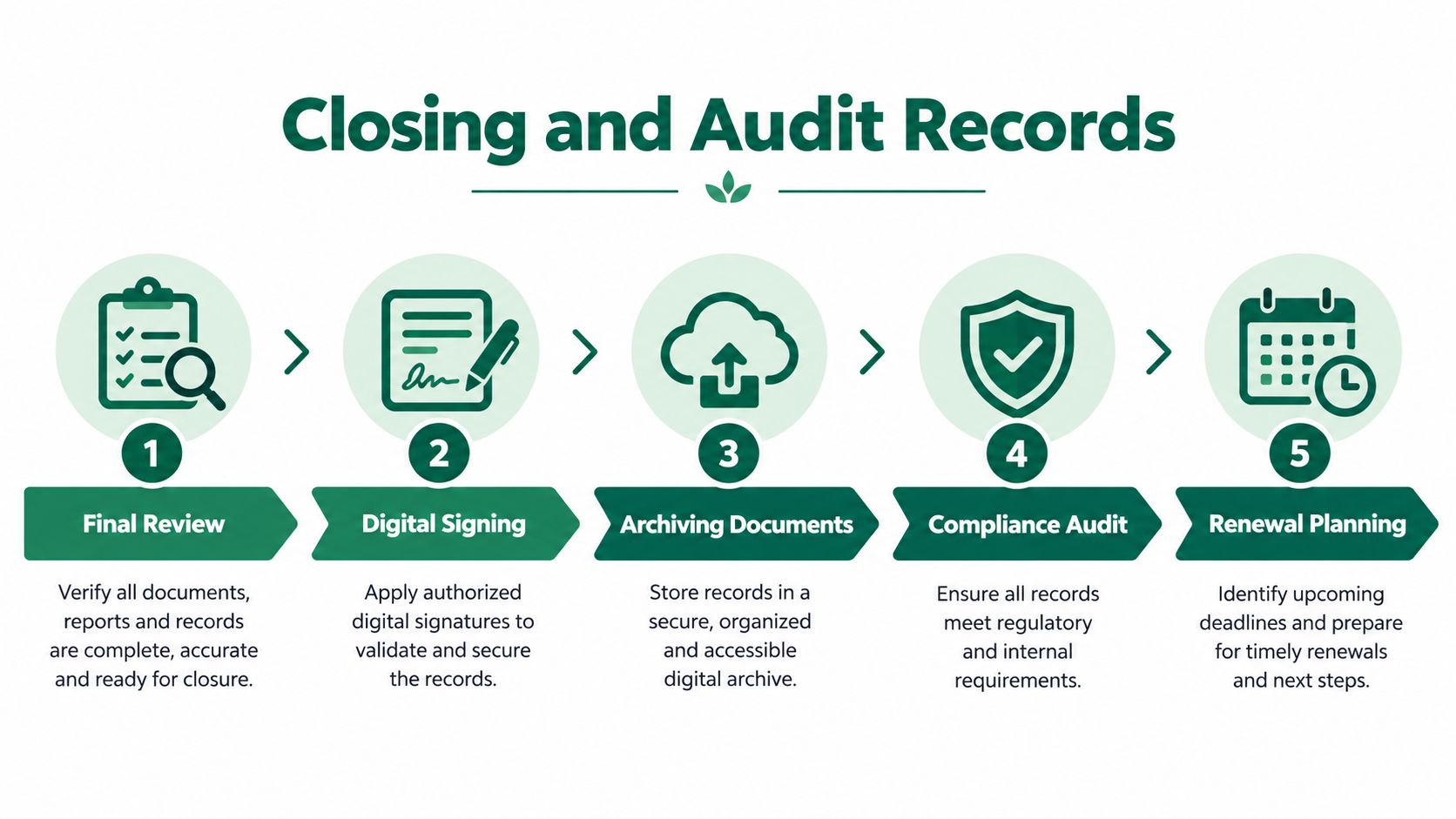
A signature confirms agreement, but it doesn't prove that the final document reflects the agreement reached in the room. Before approval, compare the executed package against the last approved commercial position and the locked specification. Review the master agreement, order form, service level exhibit, security addendum, data processing terms, pricing schedule, product descriptions, and every incorporated URL.
Run a final drift check
Ask a reviewer who wasn't responsible for the last vendor exchange to compare the final files. Independent review catches assumptions that the negotiating team has begun to overlook. Check at least these items:
Scope: Products, modules, environments, integrations, users, and deliverables match the approved requirement.
Commercials: Unit prices, quantities, ramp schedules, credits, payment dates, taxes, and renewal mechanics match the accepted position.
Performance: Service levels, support response, maintenance terms, reporting, and remedies are present in the signed package.
Risk: Liability tiers, indemnities, confidentiality, data processing, security obligations, and insurance language are consistent.
Exit: Notice periods, termination rights, export support, deletion obligations, and transition assistance are usable.
Authority: All deviations have a named approver and a recorded business reason.
A contract register should store the final agreement, version history, decision log, evidence citations, approval record, renewal date, notice deadline, owner, and post-signature obligations. A chronological transaction record, such as the approach described in this guide to recording transactions, makes the audit trail easier to follow than a folder filled with unlabelled drafts.
Turn the record into an operating control
Assign owners for usage monitoring, invoice review, service-level reporting, security attestations, and renewal preparation. Put those responsibilities in a calendar or contract management workflow rather than leaving them in the memory of the original buyer.
The record should explain not only what the organization selected, but why. Preserve rejected alternatives, exceptions, partial compliance, business approvals, and the evidence supporting each conclusion. That history helps the next negotiation start with facts instead of reconstructing the deal from email.
Software contract negotiation works best when procurement, IT, finance, legal, and operations treat the agreement as shared infrastructure. The contract should tell people what was bought, how it will be measured, what happens when performance falls short, and who can approve a change.
Procright supports procurement teams with specification drafting, supplier discovery, evidence-based comparisons, weighted scoring, document collaboration, and spec drift detection before signature. Visit Procright to evaluate how an audit-ready sourcing record could strengthen your next software contract negotiation.
Try it on a real buy
Bring one category. Watch where the flags land.
We use a little analytics to see which pages actually help. Nothing else, no ad trackers.