5 Challenges Solved by Custom Procurement Workflows
Custom procurement workflows cut approval times, reduce errors and maverick spend, and boost visibility and compliance.
In this article
Custom procurement workflows are tailored processes designed to fix inefficiencies in purchasing systems. They replace outdated, manual methods like email chains and spreadsheets with automated, rules-based systems. Here's how they address common procurement challenges:
Streamline Manual Processes: Automating approvals and using digital intake forms reduce delays and errors, cutting cycle times by up to 60%.
Control Maverick Spending: Rules-based workflows enforce policies, reducing out-of-policy purchases by 62%.
Increase Spend Visibility: Centralized data and process tracking improve oversight, helping teams identify inefficiencies.
Ensure Compliance: Automated checks and audit trails simplify regulatory and supplier compliance.
These workflows not only save time but also lower costs and enhance decision-making across procurement operations.
How To Build A Procurement Workflow In ClickUp [Operations]
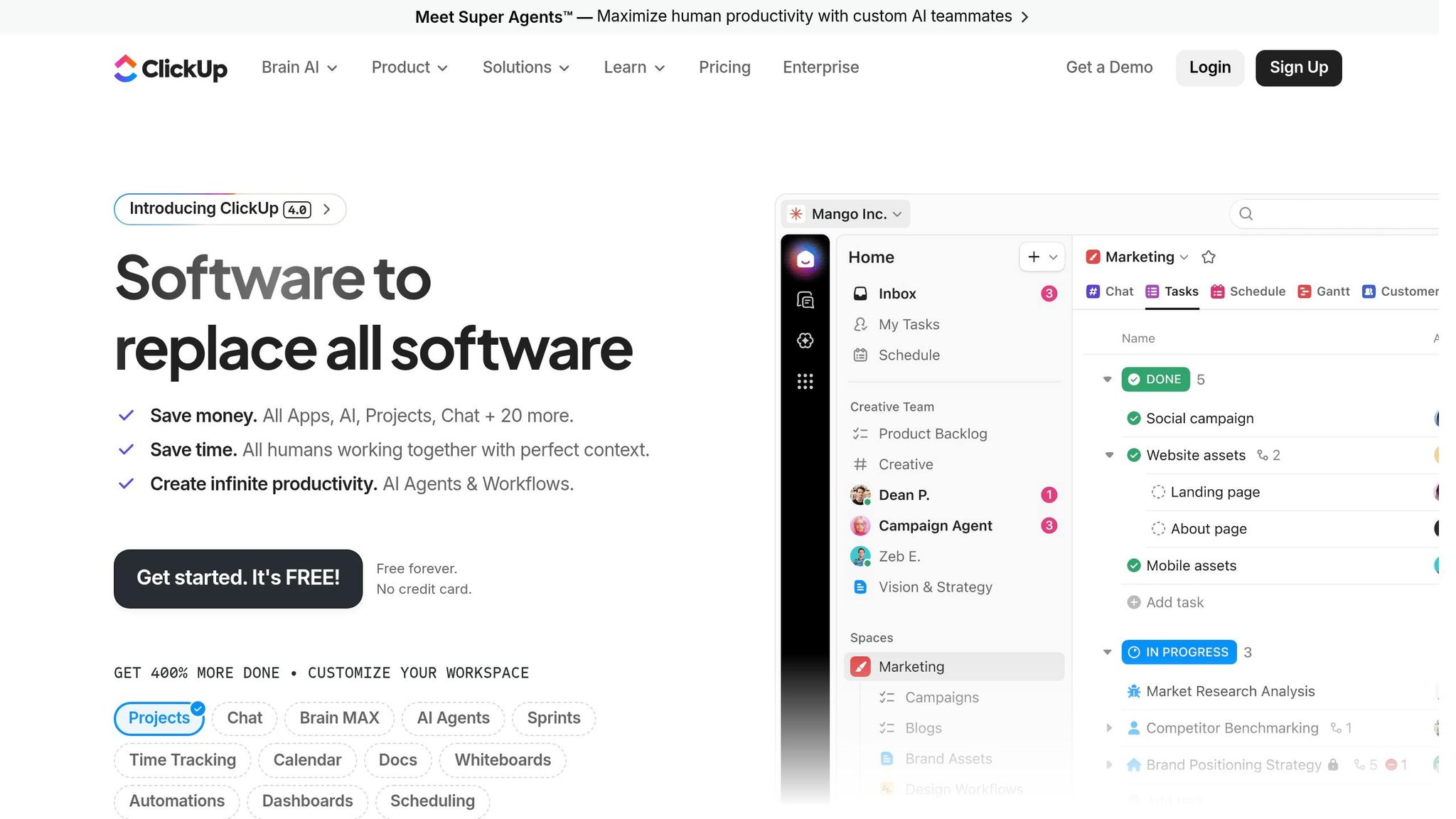
Challenge 1: Fragmented, Manual Procurement Processes
Managing procurement through emails, spreadsheets, and paper forms creates chaos. Requests get lost in inboxes, approvals drag on for days, and no one knows exactly where a purchase stands. Digital solutions provide a way to replace this confusion with streamlined, organized workflows.
Chris Sumida, Group Manager of Product Marketing at Ramp, explains it well:
"A lot of purchasing work still happens through emails, ad hoc approvals, and disconnected tools, which slows projects down and makes it harder to control spend."
On average, email-based workflows take 8.7 days to move from requisition to purchase order (PO). In contrast, system-enforced workflows cut that time down to just 1.4 days. Delays in procurement can also lead to costly idle labor, sometimes outweighing the purchase's value.
Digitizing Workflows Step by Step
The first step to fixing this problem is replacing unorganized, ad-hoc requests with structured digital intake forms. These forms require requesters to include critical details upfront, like cost centers, business justifications, and quotes, before the request even reaches an approver. This approach eliminates days of back-and-forth communication.
Automating workflows reduces the number of manual handoffs from 7–12 steps to just 2–3. This leads to faster cycle times, fewer errors, and a fully digital audit trail.
Conditional Routing Based on Spend and Category
Once workflows are digitized, processes can be further optimized by customizing the review steps based on spend and category. For example, a $300 office supply order shouldn't follow the same approval chain as a $50,000 equipment purchase. Conditional routing automates this, ensuring that requests are sent to the right approvers based on predefined rules like spend thresholds, department, or category.
Spend Range | Required Approvers |
|---|---|
Under $500 | Department Manager |
$500 – $5,000 | Department Manager + Finance Review |
$5,000 – $25,000 | Director-level Approval |
Over $25,000 | Executive Sign-off + Competitive Bidding |
This system speeds up low-value purchases while keeping high-stakes decisions under proper oversight - without anyone needing to guess who should approve what.
How Procright Reduces Manual Input Errors
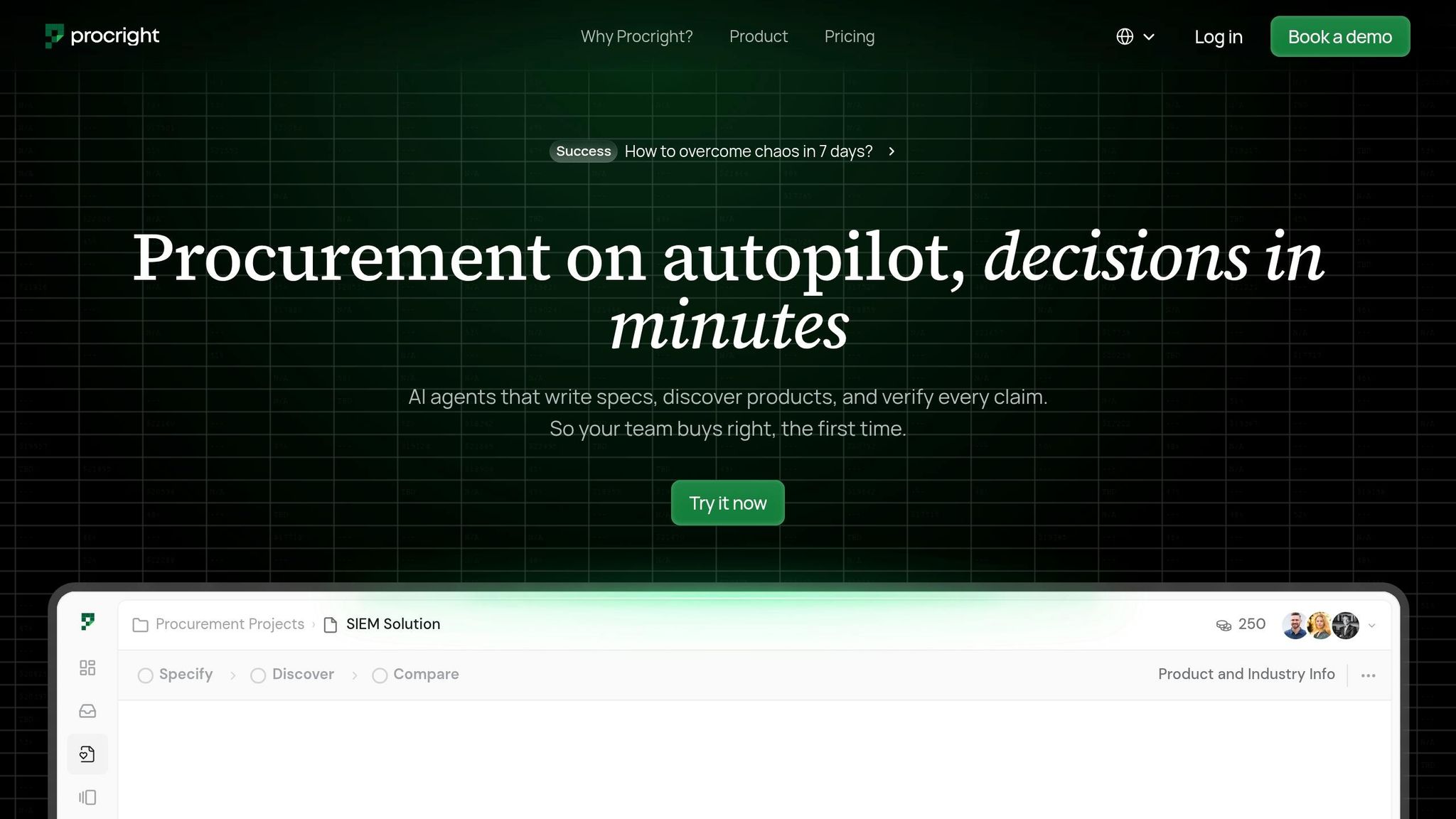
Manual procurement processes are prone to errors. Teams often work with outdated documents, misread supplier PDFs, or make decimal mistakes when copying data into comparison sheets.
Procright tackles this issue with AI-powered technical procurement specification creation. Its AI agent scans drafts, flags missing details, and suggests technical specifications automatically, reducing the likelihood of "broken specs" that result in incorrect orders. By automating these error-prone steps, Procright allows teams to focus on making informed procurement decisions instead of fixing avoidable mistakes.
Challenge 2: Inconsistent or Incomplete Specifications
When it comes to procurement, vague or incomplete specifications can rack up costs fast. For example, a request that simply states "stainless steel" instead of specifying "316L Stainless Steel, ASTM A276" leaves too much room for interpretation. Suppliers end up guessing - and they rarely guess the same way. This leads to mismatched bids, incompatible parts, and rejected batches. The numbers are staggering: specification errors can increase project costs by 15–20%, cause delays of up to 97%, and force teams to spend an average of 4.2 hours per RFQ just to resolve discrepancies. Add to that the 12–18% of procurement labor hours consumed by rework and disputes, and you’ve got a costly mess. Worse, poorly written RFPs often scare off serious bidders, leaving one in eight RFPs with only one response.
"One in eight RFPs receives only a single submission - not because the category lacks suppliers, but because the RFP itself signals that the buyer hasn't done their homework." - Uday Jain, Content and Product Marketer, Zycus
Using Templates and Intake Forms to Standardize Requirements
The solution? standardize the process from the start. Instead of allowing open-ended descriptions, custom workflows and category-specific templates ensure that every request includes the right details - like material grades, tolerances, certifications, and application context. Templates stop the process in its tracks if critical fields are missing, preventing gaps before they turn into expensive problems.
Fixing specification issues early matters. Addressing a gap at the intake stage is far cheaper and faster than dealing with it mid-RFQ. The result? Faster quotes, more competitive bids, and fewer orders that need to be redone.
Procright takes this standardization further, transforming incomplete or messy inputs into fully structured specifications.
How Procright Converts Free-Text Descriptions into Fully Structured, Machine-Readable Specifications
Even with templates, teams sometimes start with rough descriptions or scattered documents. That’s where Procright steps in. Its AI processes free-text inputs and fragmented documents, turning them into clean, structured specifications in just minutes. The system doesn’t stop at reformatting; it also flags missing fields based on industry standards. Teams can even upload multiple fragmented documents, and the AI merges them into one cohesive spec - ready for supplier quotes without the need for manual cleanup.
"The specification is the product. There is no standard. The quote is only as good as the information that went into requesting it." - SpecLens
Comparing Products Based on Spec Alignment
Once specifications are structured, Procright’s AI takes it a step further by analyzing supplier products against those requirements. It generates a Compliance Score for each option, allowing teams to see how well each product aligns with their needs. Critical requirements can be weighted more heavily, ensuring that the most important criteria drive the evaluation. Every score is fully transparent, showing the exact document or data point used to calculate it.
Manual gap analysis for a 10-vendor response to a 50-spec RFP can take 20–40 hours. Procright reduces that to minutes. By eliminating guesswork, it helps teams make faster, more accurate decisions while seamlessly integrating with broader compliance processes.
Challenge 3: Maverick Spend and Policy Violations
Custom workflows play a key role in addressing maverick spend and policy violations, which occur when purchases bypass approved channels and contracts. As Mark Schenecker, VP of Direct Materials at Coupa, explains:
"People go rogue because they're trying to get their day done. They need a material or service, and they just spend."
This tendency to sidestep protocols often stems from a desire to save time, but the financial consequences are steep. Organizations lose an estimated 10–20% of potential savings annually due to maverick spending. Even worse, failing to enforce contract governance can erode up to 40% of a negotiated agreement's value. In some cases, maverick spend can represent up to 80% of all invoices in organizations lacking proper procurement controls.
Enforcing Policies Through Workflow Rules
The key to reducing maverick spend is making compliance easier than bypassing approved channels. Custom workflows embed policy rules directly into the purchasing process, eliminating the need for manual enforcement.
One effective method is threshold-based routing. This automatically directs purchase requests to the appropriate approver based on factors like dollar amount and spend category. For instance, routine supplies under $500 might be auto-approved, while purchases exceeding $25,000 could require executive sign-off and competitive bidding. Companies implementing such workflows have seen a 62% drop in out-of-policy spend events over two years.
Preferred supplier enforcement is another critical feature. By restricting purchases to an approved vendor list, workflows ensure employees stick to negotiated contracts, preserving volume discounts. The table below illustrates how risk-tiered routing typically operates:
Risk Level | Criteria | Approval Path |
|---|---|---|
Low Risk | Routine supplies, approved vendors, <$500 | Auto-approval or single manager sign-off |
Medium Risk | New vendors, project-specific, $500–$5,000 | Manager plus finance department review |
High Risk | Capital expenditures, >$25,000 | Executive sign-off and competitive bidding |
Automated Compliance Checks with Procright
While workflow rules set the framework, automated compliance checks ensure nothing falls through the cracks. Tools like Procright analyze purchase requests against internal policies and regulatory standards, assigning a Compliance Score that flags gaps immediately. These scores are transparent, linking directly to sources like web pages, PDFs, or product documents, so procurement teams can see exactly why a product meets or fails compliance standards.
Beyond these automated checks, clear guidance is essential to help employees make informed, compliant purchasing decisions.
Guiding Employees Toward Compliant Purchases
Enforcement alone isn’t enough. As Richard Teuchler, Head of Demand Generation at Kodiak Hub, explains:
"The goal is not to 'stop people buying.' The goal is to make the right buy the easy buy."
Procright simplifies this process by providing employees with immediate feedback during product selection. Compliance scores are displayed as "Yes", "Partially", or "No" for each specification, allowing employees to quickly determine whether a product meets policy requirements. Critical criteria can be weighted more heavily to ensure the most important guidelines are prioritized. This creates a system where compliant decisions become the default, reducing the need for constant oversight.
Challenge 4: Limited Visibility Into Procurement Spend
When procurement data is spread across emails, spreadsheets, and ERP notes, finance teams lose the ability to monitor spending in real time. Instead of managing costs proactively, they’re left reacting to them after the fact. Kiril Kavardzhikov, Procurement Manager at Payhawk, captures this perfectly:
"When you say optimize, the first word that comes to my mind is visibility, because you cannot optimize something that you don't know what exactly it is."
The impact is hard to ignore. 57% of supply chain professionals identify limited visibility as a major operational hurdle. Even more concerning, 85% of procurement organizations still rely on fragmented tools for sourcing and procurement, leading to disjointed data. Without a unified view of spending, teams often duplicate vendor contracts, miss critical renewal deadlines, and fail to differentiate between strategic investments and routine operational costs.
Centralizing Data Across Every Procurement Step
Custom workflows can bring order to this chaos by capturing structured data at the very start of the procurement process. Standardized intake forms require requesters to specify cost centers, identify budget owners, and provide business justifications upfront. Each purchase order is digitally tied to its original approved request, creating a traceable record from the initial need to final payment.
This approach tackles the "shadow procurement" problem, where 20–40% of total spend can go unnoticed due to missing intake processes. Consistent status labels - like "Pending Approval", "Partially Received", and "Closed" - keep everyone aligned and ensure updates don’t slip through the cracks. With this unified record, teams can quickly identify inefficiencies and address them.
Using Process Metadata to Find Bottlenecks
Spend data shows what was purchased, but process metadata - like timestamps, rejection reasons, and approval durations - reveals how purchases were made. That’s where real operational improvements can be found.
Workflow analysis often highlights a surprising culprit: delays between steps account for 80–90% of total process cycle time. While decisions may be made quickly, the time requests spend sitting with approvers significantly slows the process. By tracking how long requests linger at each stage, teams can pinpoint which departments or individuals consistently exceed service level agreements. From there, they can address the underlying issues, whether it’s unclear policies, staffing shortages, or approval processes that could run in parallel instead of sequentially.
Metric | What It Reveals |
|---|---|
Approval Stage Dwell Time | Identifies which approvers or departments are causing delays |
Exception Rate | Highlights where intake forms or policies are confusing employees |
Invoice Processing Time | Pinpoints bottlenecks in 3-way matching or finance verification |
Discount Capture Rate | Shows the financial impact of slow approval cycles |
Actionable Insights from Procright
Procright simplifies procurement by turning unstructured inputs - like free-text descriptions, PDFs, or product pages - into structured specifications. This creates a consistent data foundation, making supplier comparisons more reliable and less subjective.
With this data in hand, Procright delivers Product Maturity Scores and Market Acceptance Rates by analyzing specifications against web, PDF, and video content. Teams can clearly see how each product matches their needs, relying on sourced, transparent data instead of vendor claims. For procurement leaders, this kind of structured visibility transforms spending data into actionable decisions.
Challenge 5: Managing Supplier and Regulatory Compliance
Custom workflows not only streamline fragmented processes but also play a crucial role in ensuring supplier and regulatory compliance. With frameworks like GDPR, SOC 2, RoHS, and CBAM demanding constant monitoring across supplier networks, staying compliant has become more challenging than ever. Gartner’s 2024 Market Guide highlights this issue:
"Regulatory requirements, legislation and costs of goods are exposing gaps and weaknesses in product and packaging specification data processes and practices."
Manually managing certifications, verifying supplier documents, and keeping up with shifting standards across multiple vendors is no longer feasible. A single expired ISO certificate or overlooked GDPR requirement can lead to fines, failed audits, or supply chain disruptions.
Risk-Based Approval Paths for High-Risk Purchases
To address supplier and regulatory challenges, automated workflows with risk-based approval paths are essential. These workflows adapt based on factors like category, geography, spend thresholds, and vendor risk scores.
For high-risk categories - such as IT, data services, or high-value manufacturing - extra review steps are built into the process. These steps might include legal sign-offs, security assessments, or ESG checks before issuing a purchase order. On the other hand, low-risk purchases move through the system automatically, allowing teams to focus on more critical decisions. Automated escalation ensures that high-risk approvals don’t stall, routing them to backup approvers when needed. Organizations using these workflows have reported a dramatic reduction in approval times - from 5–7 days to just 2–4 hours.
Automating Compliance Verification with Procright
Manual compliance checks are both slow and prone to errors. Procright's AI engine simplifies this by analyzing product and supplier specifications in real time.
The standout feature here is its ability to flag critical gaps right when they occur.
Simplifying Audits with Compliance Scoring and Document Storage
Once compliance is verified, streamlined audit processes further enhance transparency. Preparing for audits often takes up significant time because evidence is scattered across various platforms like inboxes, shared drives, and ERP systems. Procright’s Transparent Source Presentation links every compliance match directly to its source - whether it’s a technical guide, PDF, or video - creating a seamless, automated audit trail.
Conclusion: What Custom Procurement Workflows Deliver
Looking back at the five challenges, one thing is crystal clear: disconnected and reactive procurement comes with a hefty price tag. Inefficient manual workflows alone can inflate costs by as much as 30%, thanks to errors and delays.
Custom workflows step in as the solution to these problems. By embedding rules, routing logic, and compliance checks, they streamline processes to deliver faster approvals, cleaner data, and fewer policy violations. The results speak for themselves - organizations using AI-powered workflows have seen procurement cycle times cut by 30% to 50%. Even better, 88% of those using AI-driven procurement report seeing measurable ROI.
Platforms like Procright stand out because they do more than just automate tasks - they improve decision-making at every step. From turning messy inputs into structured specifications to comparing products against exact requirements and flagging compliance issues in real time, Procright helps teams get it right the first time.
"AI in procurement creates value when it operates inside structured, connected processes - not alongside them." - Payhawk
Custom procurement workflows aren't just a nice-to-have - they're a game-changer for cutting waste, staying compliant, and making faster, smarter decisions.
FAQs
What should a custom procurement workflow include first?
A custom procurement workflow starts with a standardized request intake process. Instead of relying on informal methods like emails, implement a centralized, smart intake form. This approach ensures every purchase request collects essential details - like business justification, item descriptions, and estimated costs - in a consistent manner. By adopting this structure, teams can reduce rework, eliminate delays, and ensure requests are ready for prompt review.
How do I set approval rules without slowing small purchases?
To simplify minor purchases, implement auto-approval rules for routine, low-risk transactions. Review the past year's data to determine a suitable threshold - say, between $200 and $750 - for small, repetitive orders. For mid-range purchases, consider using parallel approvals, where multiple stakeholders can review requests at the same time. This method reduces bottlenecks and ensures that executive attention is reserved for high-value, strategic decisions.
How can we prove compliance quickly during an audit?
Streamlining compliance during an audit becomes much easier with an automated, audit-ready workflow that centralizes all procurement data. By capturing crucial documentation - like requisitions, approvals, supplier responses, and real-time 3-way matching - you can skip the chaos of sorting through scattered records when an audit comes up.
Procright takes it a step further by analyzing specifications and delivering clear compliance scores. This allows teams to efficiently confirm that products align with required standards and internal policies, saving time and reducing stress during the audit process.
Related Blog Posts
Try it on a real buy
Bring one category. Watch where the flags land.
We use a little analytics to see which pages actually help. Nothing else, no ad trackers.